Big-Bang Transformations Carry Big Risk: How to Stage Enterprise Change
Eight ways to reduce enterprise transformation risk by controlling how much change the business absorbs at one time.
Suvajit Basu
Author
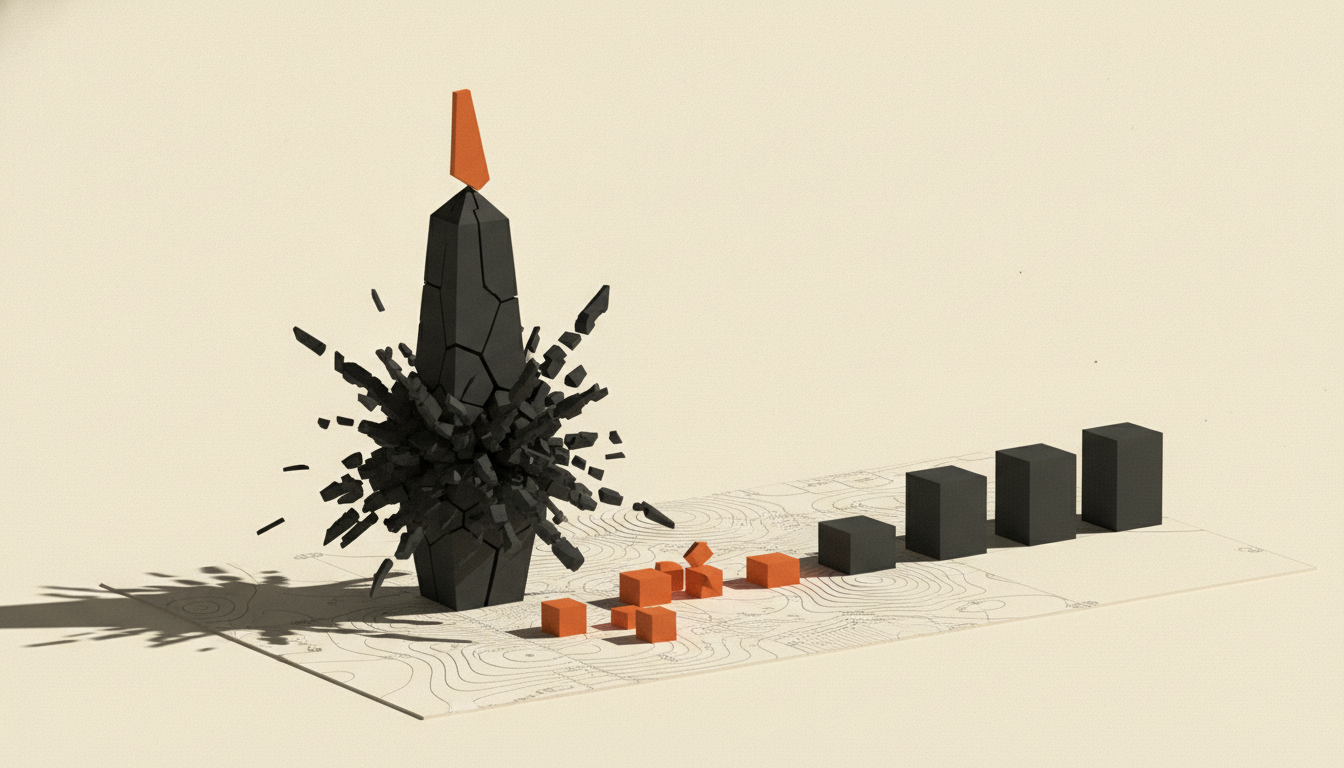
Big-bang transformations concentrate technology, operational, financial, and organizational risk into one event. CIOs can reduce that exposure by staging change across locations, business units, operating seasons, departments, and capabilities, while using readiness gates and lessons from each wave to improve the next.
Large enterprise transformations often begin with an understandable ambition: replace the old platform, standardize the processes, move everyone onto the new environment, get through the disruption, and move forward.
A single cutover can look efficient on a project plan. It also concentrates a remarkable amount of operational risk into one moment.
ERP, supply chain, warehouse management, finance, order management, and other enterprise systems sit inside the daily machinery of the business. Problems can affect orders, shipments, inventory, production, invoices, reporting, customers, and employees.
One of the most important transformation decisions should therefore happen before configuration begins:
How much change should the business absorb at one time?
I have become a strong believer in designing the rollout architecture as carefully as the technology architecture.
1. Stage by location
Start with one plant, warehouse, country, regional office, or distribution center.
A real operating location will expose things conference-room testing cannot. Local processes may differ from the documented process. Master data may be incomplete. Production volumes may expose integration issues. Users may interpret the new process differently.
The first location becomes a learning environment.
Choose it carefully. It should be representative enough to teach you something and manageable enough to contain problems.
2. Stage by business unit
Companies that have grown through acquisitions or decentralized management frequently have different operating models across business units.
Moving all of them simultaneously can introduce tremendous complexity.
Use the first business unit to establish the enterprise template.
Ask:
Which processes can be standardized?
Which differences genuinely create value?
Which data definitions work across the company?
Which controls need to remain local?
Which configuration decisions should become reusable?
Wave two should inherit the learning from wave one.
3. Respect the operating calendar
Technology teams operate around project dates. Businesses operate around seasons.
Those calendars can conflict.
Retail has peak selling periods. Manufacturing has production cycles. Distribution has seasonal demand. Finance has quarter-end and year-end. Sales organizations have customer commitments.
A technically convenient go-live date can be a terrible business date.
Before selecting the cutover window, understand when disruption would carry the greatest business consequence.
Sometimes moving a rollout several weeks is sound risk management.
4. Stage by department or function
Finance, procurement, HR, manufacturing, distribution, sales, and service do not necessarily need to change simultaneously.
Where the architecture permits it, functional staging can reduce the amount of organizational change occurring at one time.
The important issue is dependency.
Can Finance move while surrounding processes remain stable?
Can procurement change without disrupting receiving and accounts payable?
Can warehouse processes change without creating problems for order management?
Use the operating dependency to design the sequence.
5. Stage by business capability
Sometimes the right unit of transformation is a process rather than a location or department.
Examples include demand planning, supplier onboarding, order capture, inventory management, financial close, contract management, or customer service.
This approach can allow the organization to deliver useful improvements incrementally.
Each increment should answer a business question:
What became faster?
What became more accurate?
What manual work disappeared?
What control improved?
What new capability became available?
Breaking a large project into smaller project plans accomplishes little by itself. Each stage should produce usable operating value.
6. Use readiness gates instead of calendar optimism
A program date can acquire a life of its own.
Executives communicate it. Consultants schedule around it. Teams organize around it. Then warning signs appear.
Testing is incomplete. Data conversion is behind. Users are concerned. Integrations remain unstable.
Changing the date begins to feel like failure.
Establish objective readiness gates before reaching that moment.
For example:
Critical operating scenarios have passed testing.
Data conversion meets agreed quality standards.
Critical integrations are stable.
Business leaders confirm operational readiness.
Support teams are prepared.
Cutover and recovery procedures have been rehearsed.
Remaining risks are explicitly understood and accepted.
Now the evidence helps determine whether the organization is ready.
7. Design containment before go-live
Every major implementation has a cutover plan.
It also needs a containment plan.
What happens if orders cannot process?
Can the previous environment remain available?
Can a warehouse continue operating?
Can financial transactions be reconciled later?
Can one location be isolated?
Who has authority to stop the rollout?
A staged approach makes containment easier because fewer operations are exposed simultaneously.
Control the blast radius before you need to.
8. Turn each rollout into evidence for the next
The greatest advantage of staging is learning.
After every wave, ask:
What surprised us?
What did users struggle with?
Which data issues appeared?
Which integrations caused trouble?
Which reports were missing?
Where did people create workarounds?
What took longer than expected?
What changes before the next wave?
Then update the implementation template, testing, training, data rules, cutover process, and support model.
Wave two should be better than wave one.
When big bang is necessary
Some situations require a coordinated cutover.
Highly integrated transaction flows can make prolonged coexistence difficult. Running parallel financial systems may create reconciliation problems. Regulatory requirements may establish a fixed deadline. Temporary interfaces between old and new systems may create greater risk than a coordinated change.
In those cases, understand the risk concentration and prepare accordingly.
Increase testing. Strengthen business continuity. Rehearse cutover. Define decision gates. Prepare recovery alternatives.
Make big bang a deliberate risk decision.
Eight questions I would ask
Before approving a major rollout strategy:
Can we reduce exposure by starting with one location?
Can we sequence business units?
Are we avoiding sensitive operating periods?
Can functions move independently?
Can we stage by business capability?
What evidence determines readiness?
How do we contain an operational problem?
How will this rollout make the next one better?
The objective is to move the organization safely from one operating model to another.
More simultaneous change does not make a transformation more ambitious.
Sometimes it simply makes the consequences of a mistake larger.
Keep reading
Why I Am Building the CIO Operating System
Years of building, implementing, and operating enterprise technology led me to a simple question: why is running the business of technology still so fragmented? That question led to the CIO Operating System and to TekLedger.
Digital TransformationWhat Is a CIO Operating System?
CIOs already have systems of record for Finance, IT, Security, Procurement, projects, and contracts. A CIO Operating System addresses a different problem: helping leadership connect those facts around the decisions required to run technology as a business.